Wednesday, August 15, 2012

20th Sunday of the Year : Homily / Sermon

Anyone who eats this bread will live for ever. (John 6:58)
NewImage

Holy days of obligation are now few and far between - with the exception of Sunday that is. As I'm sure you know, in this country there are now only four which may fall on weekdays, and these are St Peter and St Paul (June 29th), the Assumption (August 15th), All Saints' Day (November 1st), and of course Christmas Day. Even the first three occur on weekdays only about half the time - because if their dates fall on a Saturday or a Monday then they are transferred to the Sunday.

Holy Days can be an especial challenge when we are on holiday - two of the four fall in the summer, and of course if we are not in England and Wales we might find what is a holy day at home is not where we are, or even more confusing we could be completely unaware that a day of obligation is taking place in our holiday location while we are sat by the pool.

Now, no doubt many Catholics today sit light to this particular precept of the Church, especially when it affects weekday obligations, and also, sad to say, the Sunday obligation too. It is not just the obligation of course, other important holy days ansd holy seasons such as holy week, Easter and Christmas are becoming times not for worship with the parish community, but occasions for family holidays, perhaps by force of circumstance but often also by choice.

To many of us, no doubt, the requirement to love our neighbour as ourself, to treat others with respect, to be honest and generous - these seem far more important values to guide our conduct at home and on holiday than whether or not we manage to get to Church.

Yet just because one value is more important than another doesn't make the lesser of no importance at all. And many Catholics, not just younger ones, still see it important when going on holiday to find out where the Church is and what time mass is offered.

It is worth reflecting why we have the Obligation, and what it is for.

First, why have an obligation at all?
The Church, through the Bishops, teaches us what we need to do in order to practice the faith. It is as if we ask "What do we need to do to be a practicing Catholic, a faithful member of the Church and a follower of Christ". It is like the Young Man who came to Jesus and said "What must I do to have eternal life?" In addition to the commandments, the Church gives us six simple rules - or precepts - the Mass Obligation is one of these.
In setting before us the obligation the Church is saying to us "This is what you need to do, the basic minimum, to practice the Faith". In other words - if you want to be a Catholic, if you want to be counted a follower of Christ, then this is one of the basic requirements of membership.

Secondly, lets be clear, the obligation is not to go to Church. Neither is it an obligation to receive communion. It is an obligation to hear mass, to be present at the celebration of Mass, on Sundays and other given days, if it is possible for us to do so. (The obligation is to do what is possible, never what is not possible).

Thirdly, and here is the nub, the obligation answers that fundamental question - what must I do to have eternal life? Anyone who eats this bread will live for ever, Jesus says.
if you do not eat the flesh of the Son of Man and drink his blood,
you will not have life in you, he tells us. ... He who eats my flesh and drinks my blood lives in me and I live in him ... whoever eats me will draw life from me, he explains.
We can say prayers, and read the Scriptures at home, on a bus or a plane, of course, and sometimes we may have to. We can receive communion in our homes or in hospital, and at some times in our lives that may be necesssary. But none of these are substitutes for the Mass, which the Church calls "the source and summit of the Christian life". At Mass we come together with other Christians, normally gather in a Church or Chapel, and celebrate this most holy sacrament, the bread of life, the blood of salvation, the food for the journey of life.

If we wish to live as the Body of Christ, then we must share in that Body, drink that Blood, live that life, and live for ever.

The Assumption of Our Lady : Homily / Sermon

He has looked upon his lowly handmaid (Luke 1:48)

NewImage

Time and Time again in scripture we read a small insignificant people who make an enormous impact. There is David, who defeats goliath! We are the story of Gideon it defeats the Midianites with just a small band of people. there is Elijah, the only prophet of the Lord left, who nevertheless overcomes the many prophets of Baal. The profit Jeremiah 2, risks his own safety and loses his liberty, by speaking out against the king and his counsellors.

And Mary, too, is placed before uses one of these small and insgnificant people who has such an important place in God's plan. 


And people often notice this about Our Lady. Scripture tells us very little about her. Mark’s Gospel tells us little more than her name. St Luke’s Gospel - which we hear today - tells us the most. She is mentioned rarely during Jesus’ ministry; at the foot of the cross she stands with the disciple John; and on the day of Pentecost, she is at prayer with the disciples. Many of the other details which have come down to us about Our Lady - that her parents were called Joachim and Anne, that her last home on earth was with St John in Ephesus, have been handed down through tradition, not scripture. 


On the face of it then, Mary did little and achieved little. No real great claim to fame here, perhaps. Few accomplishment. Little to make a fuss about. 

But of course we do not need long stories, many details. She is the one who is blessed because she believed that the promise made her by the Lord would be fulfilled. She is full of God’s grace. She is our Mother in the Faith. Her honour comes not so much from what she did - because what she did was so very simple - but from who she is. She lived her calling to full and at the end of her life was gathered up by her Son to share the fullness of his life.


And we can say more - because Mary's story does not end with her entry into heaven - it begins here. 

Though she is mentioned only on selected occasions in the Gospels, and we know very few of her words, yet she has dominated the art, the music and the faith of the world for centuries. She has sometimes been the centre of disputes amongst Christians, but she has also been at the heart of the inspiration and devotion of so many. Catholics and Orthodox unite in calling her Mother of God. Protestant Christians recognise her importance in the Christian story. Even the Koran devotes several chapters to her. 

We could summarise all this  in theological terms, and say that she has a crucial role in the story of salvation, she is the closest human person to Our Lord himself in this life and the next, she most certainly dwells with God. That, in a nutshell, is more or less what is meant by the Assumption, which we celebrate today. 

But we could also put it in a more human, personal way. Mary is always about meeting, about encounter: look at the Gospels - the Annunciation, when she is greeted by the angel; the Visitation, when she greets her cousin Elisabeth; the Crucifixion, when Jesus greets her from the Cross; the day of Pentecost, then and after, when she prays with the Apostles ... and Lourdes and elsewhere, when she greets Bernadette and others. 

Mary is special because she meets us and we meet her - in special places and in our prayers. She is one of us, she is with us, and she dwells in the heart of her Son, as he dwells in her heart. 

Through her, the lowly handmaid,  heaven came down to earth - and with her we share the life of heaven. 

Tuesday, August 07, 2012

19th Sunday of the Year : Homily / Sermon

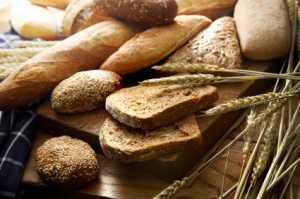
This is the bread that comes down from heaven, so that a man may eat it and not die.

NewImage

Food is big business. Our supermarkets sell food of amazing variety, some of which has been flown in from all parts of the world. Television programmes showcase cooks and recipes. Books and magazines give recipes, advice and wonderful photos of culinary creations. Restaurants and take aways provide meals and snacks to suit every possible taste and level of hunger. There is even a huge business surrounding advice, support groups and products to enable people to eat less and lose weight - weight that they have put on from enjoying food in the first place.

And this is true even in the midst of a financial hardship.

Yet in our affluent society, we tend to lose sight of the most basic fact: that we eat to live, we need food for survival. Without food we will wither, weaken, and die. Food is our fuel and our energy. Well nourished human beings grow and flourish.

Our daily bread is a necessity for life.

Yet notice this - this necessity, this survival is never quite enough for us. We embelish it, decorate it, celebrate it. We could live, survive, on astronaut’s food, tablets, pills, vitamins, but we don’t unless it is a medical necessity. We could live, survive in solitary confinement. But we don’t - unless we are forced to. We want much more - we need more.

The way in which we treat food is itself a proof to us of what we are and what we are called to be. We do not live on bread alone, because we give meaning and purpose to the basic things we do. We do not simply reproduce, but we love. We do not simply communicate, but we converse. We do not simply learn in order to work, but we learn to grow. When we read, we don’t do so just to follow directions, but to think and reflect and to pray. We don’t just look at pictures, but we admire art. All the basic things we do, things we need to do to survive, point us beyond our survival to the celebration of beauty and joy and love. They point us to truth. They lead us to heaven. They point us to God, to Christ, the bread of life come down from heaven.

They instruct us that there is more than just physical survival: there is a bread which we can eat which leads to eternal life.

---

Photo from allotment.org.uk