Showing posts with label Year B. Show all posts

Friday, August 14, 2015

The Assumption of Our Lady • Homily / Sermon

He has looked upon his lowly handmaid (Luke 1:48)

O MUSLIM JESUS facebook

Time and Time again in scripture we read a small insignificant people who make an enormous impact. There is David, who defeats Goliath! There is also the story of Gideon who defeats the Midianites with just a small band of people. There is Elijah, the only prophet of the Lord left, who nevertheless overcomes the many prophets of Baal. The prophet Jeremiah too, risks his own safety and loses his liberty, by speaking out against the king and his counsellors.
And Mary, too, is placed before us as one of these small and insignificant people who has such an important place in God's plan.

People often notice this about Our Lady. Scripture tells us very little about her. Mark’s Gospel tells us little more than her name. There is not much more in St Matthew. St John’s Gospel includes the accounts of some important events - most notably the turning of the water in wine at Cana in Galilee, and as she stands at the foot of the cross. But it is St Luke’s Gospel - which we hear today - and the beginning of the Acts of Apostles - which Luke also wrote - which tell us the most. She is mentioned rarely during Jesus’ ministry; at the foot of the cross she stands with the disciple John; and on the day of Pentecost, she is at prayer with the disciples. Many of the other details which have come down to us about Our Lady - that her parents were called Joachim and Anne, that her last home on earth was with St John in Ephesus, have been handed down through tradition, not scripture. 

On the face of it then, Mary did little and achieved little. No real great claim to fame here, perhaps. Few accomplishments. Little to make a fuss about. 

But of course we do not need long stories, many details. She is the one who is blessed because she believed that the promise made her by the Lord would be fulfilled. She is full of God’s grace. She is our Mother in the Faith. Her honour comes not so much from what she did - because what she did was so very simple - but from who she is. She lived her calling to the full and at the end of her life was gathered up by her Son to share the fullness of his life.
And we can say more - because Mary's story does not end with her entry into heaven - it begins here. 
Though she is mentioned only on selected occasions in the Gospels, and we know very few of her words, yet she has dominated the art, the music and the faith of the world for centuries. She has sometimes been the centre of disputes amongst Christians, but she has also been at the heart of the inspiration and devotion of so many. Catholics and Orthodox unite in calling her Mother of God. Protestant Christians recognise her importance in the Christian story. Even the Koran devotes several chapters to her. 

We could summarise all this  in theological terms, and say that she has a crucial role in the story of salvation, she is the closest human person to Our Lord himself in this life and the next, she most certainly dwells with God. That, in a nutshell, is more or less what is meant by the Assumption, which we celebrate today. 

But we could also put it in a more human, personal way. Mary is always about meeting, about encounter: look at the Gospels - the Annunciation, when she is greeted by the angel; the Visitation, when she greets her cousin Elisabeth; the Crucifixion, when Jesus greets her from the Cross; the day of Pentecost, then and after, when she prays with the Apostles ... and Lourdes and elsewhere, when she greets Bernadette and others. 

Mary is special because she meets us and we meet her - in special places and in our prayers. She is one of us, she is with us, and she dwells in the heart of her Son, as he dwells in her heart. 

Through her, the lowly handmaid,  heaven came down to earth - and with her we share the life of heaven. 

Thursday, July 30, 2015

18th Sunday of the Year (B) : Homily / Sermon

Work for the food that endures to eternal life (John 6:27)

Do you believe in mind over matter?

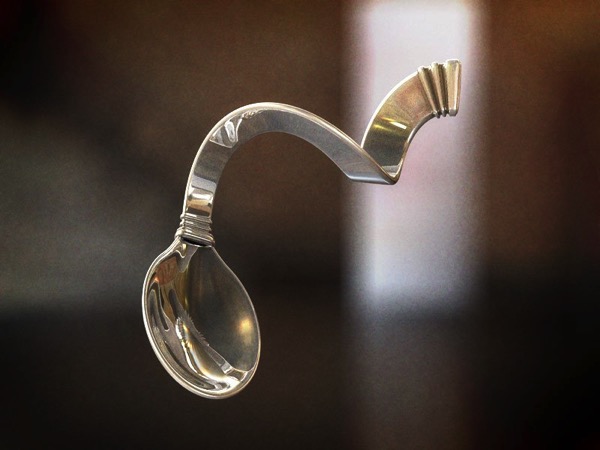
Spoon Bending - an example of mind over matter?

It is certainly true that the mind can have great power over the body. (It’s not just a matter of spoon bending - which may well be a conjurer's illusion). There are those who can will themselves to walk barefoot over hot coals, apparently without pain or injury. Under hypnosis people can be encouraged to do things they would never normally be able to achieve. And there is much evidence that when sick people are given placebos - tablets that they believe to have medicinal content, but which have none - they may nevertheless recover just as if they have been given the real drug. It is not just a matter of will-power and determination, the mind is even more powerful than that.

And so people sometimes suppose that the mind, or the “spirit” as we might say, is always greater, more powerful, more real than matter, body, physical reality. They suggest that if you just pull yourself together, or meditate, or pray hard enough, then all your troubles and even illnesses will go away … And (following this absurd point of view) … If your troubles continue, then your determination, commitment, resolve and indeed faith must have failed in some way. Isn’t it said “faith can move mountains”? If so - this idea goes - I only have to pray hard enough and all my wishes will be be fulfilled. And if they aren’t - then hasn’t my faith has failed …

Well. The mind is powerful. And prayer can help us achieve very much.

But no one is all mind, no one just body, both are part of one another - and we know only too well that if we are ill, then it affects both mind and body. Toothache makes us bad tempered - not even the greatest saint can get away from that.
So we need to be careful. This false division, between mind and body, can affect how we think of our spiritual life.

It is a common mistake, that both religious and non-religious people make, to separate out the spiritual and the physical.

On the one hand, religious people may think of the spirit as something very distinct from our physical existence. In this idea we hunger or suffer in the body but the spirit is free from need and free from pain, it is just pure thought, pure personality, free from the chains of physical life. Don’t be concerned about suffering on earth - so this viewpoint supposes - your reward will be great in heaven.

And the reverse of this particular coin is that the physical world is complete in itself. It has no need of “spirit”, or a “next” life. This view gives us the idea that science can answer every question and solve every problem. The physical world - so it seems - can answer its own questions without - as the atheists put it - resorting to our “imaginary friends”.
These are very commonly held ideas. And though they lead to opposite points of view, fundamentally they share the same assumptions. And they are both wrong.

When Jesus explains the spirit he always describes it in very solid, very physical terms. It is the food which endures for ever. It is the satisfying of hunger and the quenching of thirst. It is the bread which comes down from heaven.

It is the spirit which fills the physical with life and truth and purpose, and eternity. Without the spirit, matter has no purpose, no meaning. It is something to be used. Something to be discarded. Something of no value. With the Spirit, matter becomes something we can use in a right or a wrong way. And how we use the physical world, nature, is a moral issue - as Pope Francis has made very clear. The beauty of nature, the diversity of species, the resources of the planet are as much moral issues as compassion and social justice. 

Spirit and matter, soul and body are not two separate things best kept apart. They are one: created by God, redeemed by him in Christ, the Word made flesh, the bread of heaven.

Lord, give us that bread always! (John 6:34)

Friday, July 13, 2012

15th Sunday of the Year : Homily / Sermon

So they set off to preach repentance; and they cast out many devils, and anointed many sick people with oil and cured them.

NewImage

Jesus sent the Twelve out to preach the Good News, the Good News of the Gospel. And that Good News is a call to repentance.

This not what we think of usually as Good News. Good news is the surprise lottery win, the announcement of a birth or a marriage, being given the all clear, the result of the match, the winning of the prize, the success in examinations or a job interview. And in all these, notice, for all our efforts beforehand, Good News is something that happens to us, it is gift, it is grace.

Yet here, in this Gospel the message is one of repentance, contrition, sorrow for sins. It is something we have to do, and something which is painful - to admit our own fault, to confess our sins, to acknowledge our failures, our impatience, our dishonesty, our unkindnesses and cruelties. It might be necessary - but how can this be a message to preach. How can this be Gospel? How can this be Good News?

Well it can - it is - of course it is - because what the Twelve are sent out to preach with such urgency is not the wickedness of the world, but greatest of God’s mercy. They move from house to house and place to place rapidly, wasting no time with those who do not want to here because they are there not to condemn but to give the offer of a Great Gift, the Gift of Forgiveness which is freely given by God to everyone who embraces it, and this gift heals minds and hearts, casts out anxiety and soothes infirmity.

And all we need to do to receive this great gift of God - is to acknowledge that we need it.

Friday, May 18, 2012

Ascension Day: Homily / Sermon

Go out to the whole world! Proclaim the Good News! (Mark 16:16)

NewImage

Nowadays, when someone witnesses an extraordinary event, the question which is always asked, after enquiring what actually happened, is "and how did you feel?" It seems in our day we are obsessed not only by knowing what took place, but also finding out how it touched people, what their emotional response was, how they felt.

The Ascesion is certainly an extraordinary event. So how did the disciples feel? It must have been a mixed bag of emotions. Sadness, distress even, that the close presence of Jesus they had known these past 40 days is to come to an end. Apprehension also, perhaps, that they now will need to make their way without his inspiration and leadership. Fear, no doubt, that they too might have to suffer persecution and hatred. Bewilderment, at what had taken place, struggling to sense of it all.

And in the midst of this turmoil of emotions, a clear message breaks through from the Lord himself. Not really words of comfort or reassurance - more words of inspiration and challenge: Go out to the whole world! Proclaim the Good News!

This is not a time for sorrow or fear, he is saying. Not even a time for joy and celebration. It is a time for action.

This is not a time to fear for the faith, but a time to spread it.
This is not a time to cower or hide to avoid persecution or ridicule, but a time to hold our heads high!
This is not a time to puzzle over what it all means, but to proclaim the truth with confidence.

It was true then. And it is true now.

Saturday, March 17, 2012

Lent 4: Homily / Sermon

‘Men have shown they prefer darkness to the light … but the man who lives by the truth come out into the light.’ (John 3:21)

NewImage

We have heard in the news this week that the Archbishop of Canterbury, Rowan Williams is to retire later this year. The news took me back to a couple of years ago when Cardinal Cormac Murphy-O'Connor announced his retirement as Archbishop of Westminster.

He spoke about belief and said that those who denied the existence of the spiritual were actually giving only a partial view of what it means to be human. In other words, the atheist does not put humanity at the centre, but actually reduces humanity by denying our spiritual dimension. It’s not a new idea at all and it’s been stated by many others, including the Holy Father, but it struck a chord as explaining why the Church so often seems to find itself in conflict with society - over marriage, over Church schools, over abortion and euthanasia, over testing on embryos,  - all of these modern ideas deny the spiritual dimension of humanity, and by doing this they make us less than human, more like animals.

Now then, is taken up in today’s Gospel.

To deny the existence of God, and even more to act as if God does not exist, as if there is no spiritual dimension to human existence, is to live in darkness. It is a denial of the truth, a refusal or an inability to see what is there.

Sometimes there is a wilful blindness to the heritage of faith or the spiritual dimension of life, like a sort of rewriting of history. Thousands of years of society and understanding of marriage and family are swept away. We see it in many other, more trivial ways: for example there is a fashion not to use AD and BC when identifying dates, but CE and BCE instead - but the numbers, the point of origin (the coming of Christ) remains the same, but deliberately hidden.

And when people deny the spiritual dimension of human life then all kinds of terrible consequences may follow. If we are not made in the image of God, than what is that makes us all equal? What then prevents us from claiming that some are superior to others, some have fewer rights than others, some have a greater worth or quality of life than others - whether that be by race, or age, or infirmity? Of course you do not have to be a believer to recognise the basic human dignity of all, but isn’t it odd that so many have no difficulty in asserting the equality of black and white, but not of born and unborn, of healthy and sick?

“God sent his Son into the world” - the Gospel tells us - “not to condemn the world, but so that the world might be saved”. And he, the light of the world, gives us a way of seeing the full dignity of the human being, and the falsity of those who would keep humanity in darkness.

Thursday, December 08, 2011

Advent 3: Homily / Sermon

The spirit of the Lord has been given to me, for the Lord has anointed me. He has sent me to bring good news to the poor, to bind up hearts that are broken; to proclaim liberty to captives, freedom to those in prison; to proclaim a year of favour from the Lord. (Isaiah 61:1-2)

NewImage

What season of the Christian year is most charcteristic of the Christian life?

You see, I think that as Christians, we often think life is a sort of perpetual Lent. It is about repentance from sin, and doing without, and suffering in union with Christ. There is a certain drabness - just as the Church is undecorated so the Christian life is about sacrifice. Perhaps that's the kind of idea that we have grown up with.

But as a reflection of the Christian life it is too bleak, too negative, too much about suffering and not enough about victory, too much about sacrifice and not enough about happiness.

Or perhaps Easter is a better idea. If is a time of happiness and rejoicing. After all, through baptism we die and rise with Christ. In Communion we share in his risen life. Christ has saved us from sin, so we rejoice in the new life we share in him. This is our Easter faith. And over and over again we sing alleluia.

But is Easter typical of the Christian life? It's full of hope. It's optimistic. It's positive. But perhaps that's too much. We know all too well about our sins and imperfections and sufferings. We are Easter people - but not quite yet.

No. I think that more than any other season it is Advent which characterises the Christian life. Advent is a time of joy. Not only do we still sing Alleluia, but we also sing Rejoice! Emmanuel will come! And we echo the words of the first Christians 'Come. Lord Jesus!'. We eagerly await his coming. It is a time of joy, but in waiting we also realise that the best is yet to come. This life has its incompleteness, it's shortcomings, its imperfections.

We wait for the fulness of Christ's presence, yet we do so with a sure and clear hope. Advent is a time of rejoicing, a time of anticipation, a time of hope, a time when we know what it is to do without, because we know what is yet to come.

Friday, December 02, 2011

Advent 2: Homily / Sermon

“The time has come, and the Kingdom of God is near at hand!” (Mark 1:14)

NewImageThe most famous play of the playwright Samuel Becket is called “Waiting for Godot”. When it was published and first performed in the early 1950s it caused something of a storm. By the 1970s when I studied it for A level, it had become something of a classic.

It has no story really. In two acts, the two principal characters wait by a tree for the arrival of Godot. We never really find out who Godot is, and he never turns up. The two characters are like tramps, or clowns, and they seem very weak or pathetic. Overall, it is not an uplifting play, and then, and since, people have argued about what it means and who Godot is. Is he meant to represent God? Possibly? Is the tree the tree of life? Of the knowledge of Good and Evil? Or of the Cross?

The play is really about waiting, and hope, and what it can do to people. The pair are foolish because their waiting is pointless, and never ending. It drags down their lives so they cannot do anything else other than wait. The waiting weighs them down in boredom. It is a fascinating play, but also quite depressing.

The play is far from being a Christian play, because it seems to mock hope and ends in absurdity. Yet on the other hand it does present a mirror image of Christian hope.

If hope makes us inactive, if it stultifies our lives, if it imprisons and constricts us, then it is no hope at all. We, the Advent people, are waiting. And we know the wait can be long - “to the Lord a day can mean a thousand years”. So what is the difference?

That is simple. For them, they wait for something they hardly know, but which will change their lives in some inexplicable way in the future. For them the present is tedious, but the future will be different. For Christians it is very different. We wait for someone we do know, who has already visited us, who shares his life with us in the sacraments and the saints. And the waiting, in faith and hope, inspires us and encourages us. The time of waiting, the Advent of this life frees us from hopelessness: it gives us meaning and purpose.

Isaiah’s messenger cries from the mountains, the voice of John cries in the wilderness, and the voice of Jesus in the cities of Galilee to proclaim what is Good News, a joyful message. As St Peter says in the second reading, our waiting for the coming of the Day of God inspires us to live holy and saintly lives, filled with joy.

The problem with the men in the play is for them hope is in something which will change their lives in some vague once upon a time future, whereas for us, hope is in something that is changing our lives now.